- Partial loads
- Costs
Partial Loads (LTL) in Europe: Loading Metres, Prices and Empty Kilometres
One in five truck kilometres in the EU is driven empty. What a partial load is, how loading metres set the price, and how to share a truck.
5 min read
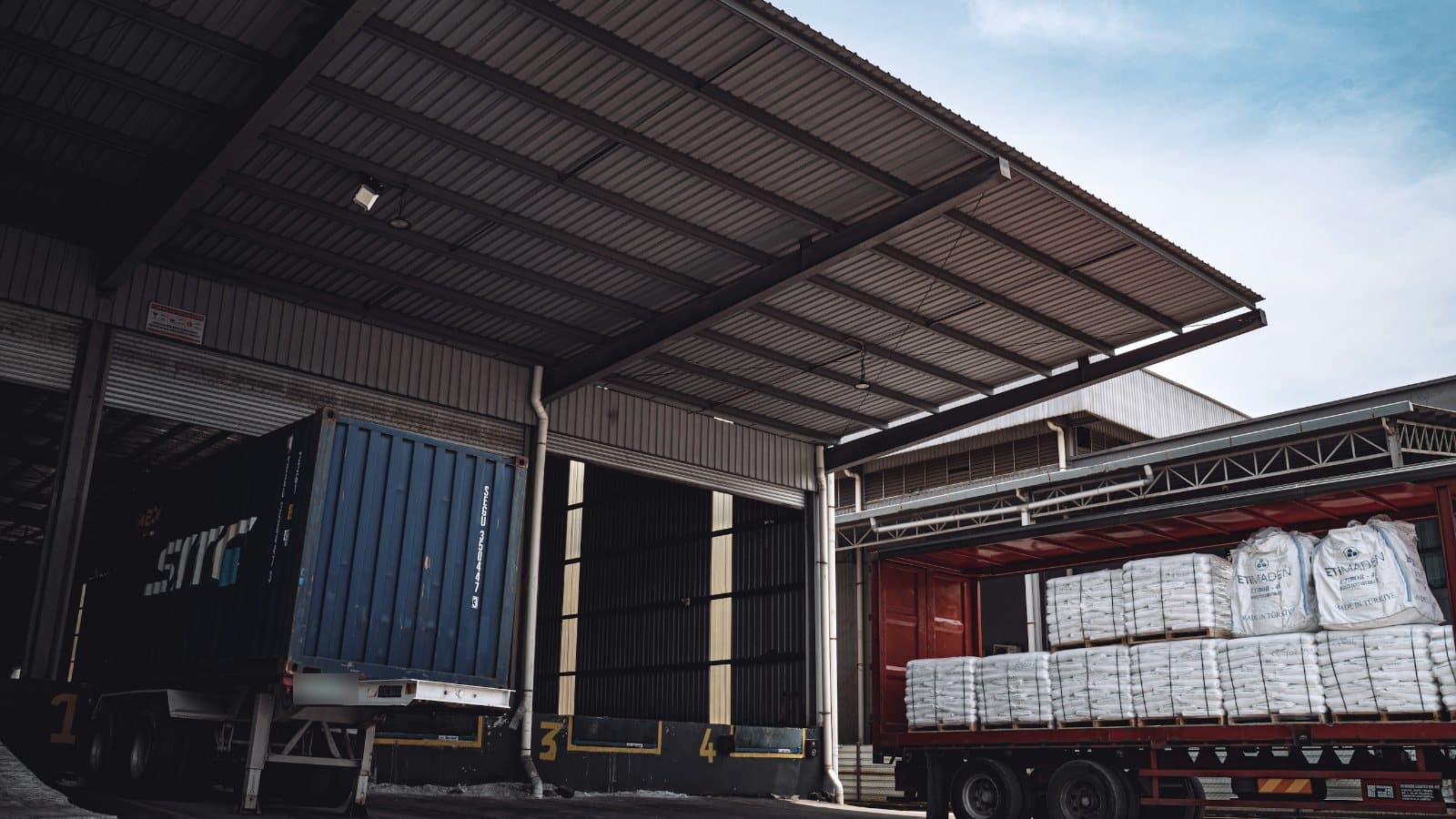
One truck kilometre in five is driven empty
According to Eurostat, 21.8% of the kilometres driven by goods vehicles in the EU in 2025 were empty: 26.0% in national transport and 12.9% in international. Even loaded trucks are rarely full. The average load on a loaded journey was 14.4 tonnes, in vehicles that mostly can carry 24 or more.
| Vehicles registered in | Empty km, all transport | National | International |
|---|---|---|---|
| Lithuania | 10.9% | 31.3% | 8.3% |
| Latvia | 22.4% | 37.2% | 14.0% |
| Estonia | 23.5% | 32.9% | 12.3% |
| Poland | 22.7% | 33.5% | 12.5% |
| Germany | 23.5% | 23.8% | 20.9% |
Lithuanian carriers are among the best in Europe at filling international runs, yet at home almost a third of their kilometres are still empty.
In 2026 that waste costs more than it ever has. Diesel in the EU passed two euros a litre, tolls are charged per kilometre whether the trailer is full or not, and there are not enough drivers. Sharing a truck is the obvious answer, and it has a name: the partial load.
Partial load, groupage, LTL, FTL: what the words mean
- Full truckload (FTL). One shipper's goods fill the truck, or the shipper pays for the whole truck. It goes straight from door to door.
- Partial load, part load or LTL (less than truckload). Your goods take part of a trailer and travel with other shippers' goods, usually on the same truck from pickup to delivery.
- Groupage. Small consignments, typically a few pallets, collected by a forwarder, combined at a terminal and sent on a scheduled line.
Where the lines are drawn differs by company. Kuehne+Nagel's 2026 terms, for example, treat a shipment as groupage under 2,500 kg or 2 loading metres, and as a full load above 20,000 kg or 10.8 loading metres. Everything in between is a part load.
How a partial load is priced
Carriers do not sell kilograms, they sell floor. The unit is the loading metre (LDM): one metre of trailer length across its full width, about 2.4 square metres. A standard 13.6 m trailer therefore has 13.6 loading metres and takes 33 euro pallets on the floor.
To work out the loading metres of a pallet, multiply its length by its width in metres and divide by 2.4.
| Pallet | Size | Loading metres | Chargeable weight at 1,850 kg per LDM |
|---|---|---|---|
| Euro pallet | 80 x 120 cm | 0.4 | 740 kg |
| Industrial (FIN) pallet | 100 x 120 cm | 0.5 | 925 kg |
| Half pallet | 60 x 80 cm | 0.2 | 370 kg |
The price is then based on the chargeable weight: the highest of the real weight, the volume weight and the loading metre weight. Common conversion factors are 1 loading metre = 1,850 kg and 1 cubic metre = 333 kg. These are what Kuehne+Nagel and Posti publish, but they are not a law. Raben in Lithuania, for instance, uses 1,250 to 1,800 kg per loading metre depending on the country. Always ask which factor a quote is based on.
A worked example
Four euro pallets of 300 kg each that cannot be stacked:
- Real weight: 4 x 300 = 1,200 kg.
- Floor: 4 x 0.4 = 1.6 loading metres.
- Loading metre weight: 1.6 x 1,850 = 2,960 kg.
You pay for 2,960 kg, not 1,200, because the floor your pallets occupy could have carried that much. If the pallets can be stacked two high, the floor halves and so does the bill. Kuehne+Nagel counts a pallet as stackable up to 500 kg and 110 cm high.
Transit time and what to watch
Groupage through a terminal network is predictable but adds handling. DSV quotes 24 to 48 hours to neighbouring countries and one to five days to more distant parts of Europe. Each transfer between trucks is a chance for damage or delay.
A direct partial load, agreed with a carrier who is already driving your lane, skips the terminal. The trade-off is timing: the truck leaves when its other loads allow. In practice:
- Give a pickup and delivery window of a day or two if you can. It is the single thing that lowers a part-load price most.
- Measure and declare honestly. Length, width, height and weight of each pallet, and whether it can be stacked. A pallet that turns out 20 cm wider can cost the carrier a whole row.
- Say what the goods are. Dangerous goods, temperature limits and tail-lift needs decide which trucks can take the load at all.
- Check the liability. CMR cover is limited by weight, so insure high-value goods separately.
Why it matters more in 2026
Three things have changed the sums:
- Fuel. At the start of October the EU average diesel price was about 40% higher than a year earlier.
- Tolls. The Netherlands joined the countries charging trucks per kilometre in July 2026 and Lithuania follows in January 2027.
- Emissions. A 26 tonne Euro 6 truck emits about 0.9 kg of CO2 per kilometre full and still about 0.7 kg empty. From December 2030 the CountEmissionsEU regulation requires any company that publishes transport emissions to calculate them by one common method, so empty running will show up in the numbers customers see.
A truck that sells its spare metres spreads all three costs over more freight. A shipper who buys only the metres needed stops paying for air.
How it works on Start2Load
Start2Load is a freight exchange built around this idea. It is free to try for 12 months, and every company is checked before it gets access.
- Shippers and forwarders post a load with its pallets, loading metres and weight. Carriers with room on that lane send a price.
- Carriers post a truck with the free space it has, by weight, pallets and loading metres, and the dates it runs.
- Both can browse loads and trucks on one map, open a listing to see the route and agree a price in the same place.
Frequently asked questions
- What is a loading metre (LDM)?
- A loading metre is one metre of trailer length across the full width of the trailer, about 2.4 square metres of floor. To calculate it for a pallet, multiply length by width in metres and divide by 2.4. A euro pallet is 0.4 loading metres.
- How many euro pallets fit in a truck?
- A standard 13.6 metre trailer takes 33 euro pallets on the floor, or 34 with a different loading pattern. If the pallets can be stacked, the number doubles as long as the weight limit allows.
- How is chargeable weight calculated for a partial load?
- It is the highest of three figures: the real weight, the volume weight and the loading metre weight. Common factors are 333 kg per cubic metre and 1,850 kg per loading metre, but carriers differ, so ask which factor a quote uses.
- What is the difference between groupage and a part load?
- Groupage is a small consignment, usually a few pallets, that a forwarder moves through its terminal network on scheduled lines. A part load is larger, takes part of a trailer and normally stays on the same truck from pickup to delivery.
- Is a partial load cheaper than a full truck?
- For anything well under a full trailer, yes, because you pay only for the floor you use. As a load approaches about 10 loading metres the price of a part load gets close to a full truck, and a dedicated vehicle becomes the better choice.
- How much of European truck traffic runs empty?
- Eurostat puts it at 21.8% of vehicle kilometres in the EU in 2025: 26.0% in national transport and 12.9% in international transport.
Sources
- Eurostat: Road freight transport by journey characteristics (empty running, 2025 data)
- Eurostat dataset road_go_ta_tott: road freight by type of operation and country
- Kuehne+Nagel Netherlands: general conditions for road transport 2026 (chargeable weight, product limits)
- Posti: freight weight ABC (loading metres and pallet sizes)
- Raben Lietuva: carrier's remuneration, conversion factors
- DSV: full loads, part loads and groupage (transit times)
- Trans.eu dictionary: loading metre (LDM)
- Timocom: avoiding empty runs and CO2, GreenRouter figures (15 July 2026)
- Regulation (EU) 2026/1030, CountEmissionsEU (EUR-Lex)