- Regulation
- Costs
Tachographs in Vans from 1 July 2026: Rules, Fines and Prices
Since 1 July 2026, vans over 2.5 t in cross-border transport need a smart tachograph. Who is covered, the exemptions, the fines and the effect on prices.
6 min read
What changed on 1 July 2026
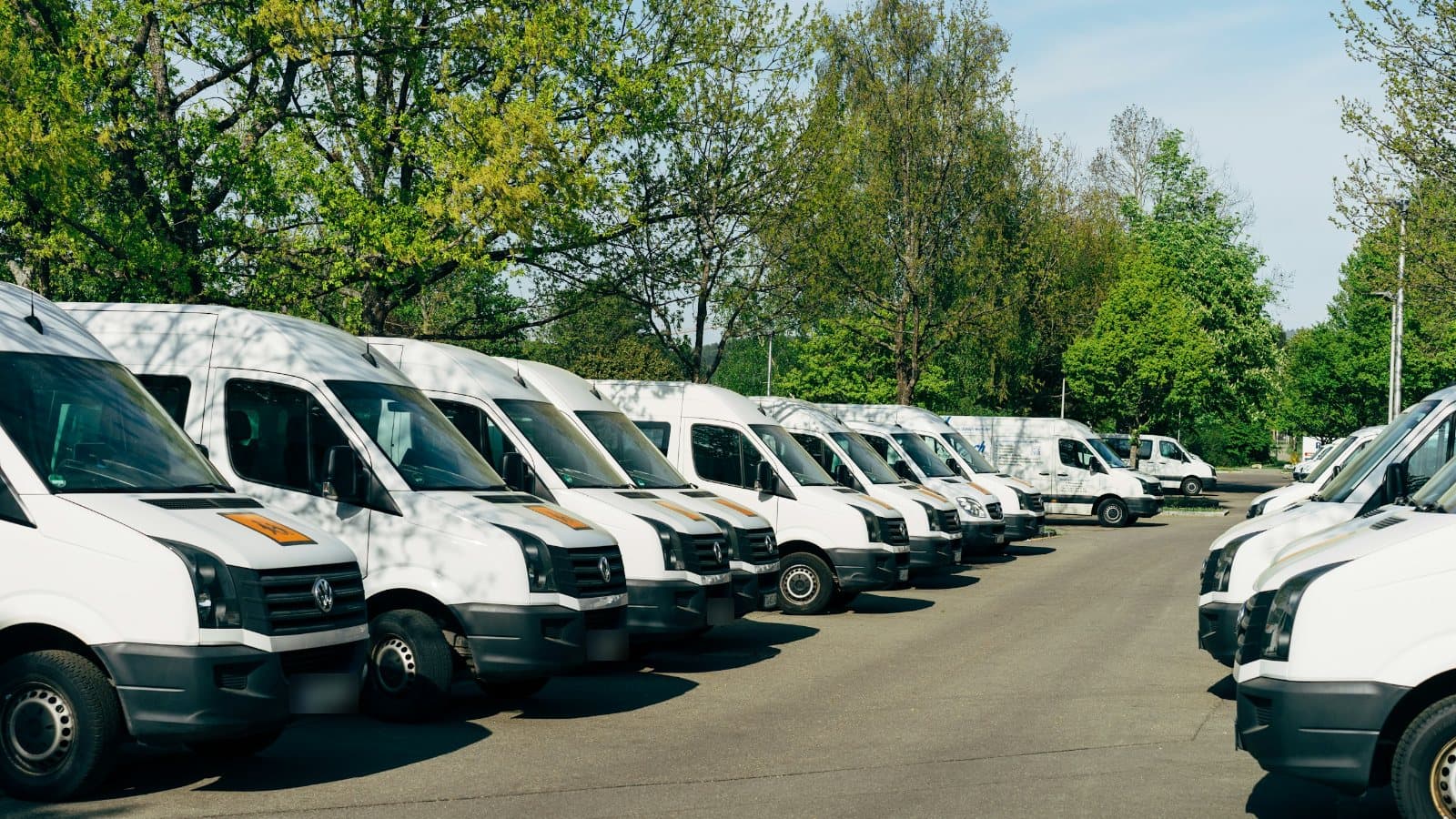
Since 1 July 2026, a van used for international transport or cabotage needs a smart tachograph if its maximum permissible mass, including any trailer, is over 2.5 tonnes. Until then the threshold was 3.5 tonnes, which left most panel vans and box vans outside the rules.
The legal basis is Article 2(1)(aa) of Regulation (EC) 561/2006, added by Regulation (EU) 2020/1054 as part of the Mobility Package. The same step brings these vans under the EU rules on driving time, breaks and rest. The European Labour Authority describes the scope as vehicles over 2.5 t and up to 3.5 t in "international carriage of goods or cabotage for hire or reward".
Two things did not change. Transport inside one country stays outside the new rule. And vans at or under 2.5 t, trailer included, are not affected at all.
In short: if you carry other people's goods across a border in a van that can weigh more than 2.5 t with its trailer, the van now needs a second-generation smart tachograph and the driver works to the same hours rules as a truck driver.
Who is exempt
The regulation lists a few exemptions that matter for small vehicles:
- Own-account transport. Vans over 2.5 t and up to 3.5 t are exempt when the goods are carried on the company's or the driver's own account, not for hire or reward, and driving is not the driver's main activity. There is no distance limit on this one.
- Tradespeople. Vehicles up to 7.5 t carrying materials, equipment or machinery for the driver's own work are exempt within 100 km of base, again only if driving is not the main activity and the transport is not for hire or reward.
- Non-commercial carriage of goods in vehicles up to 7.5 t.
The International Road Transport Union (IRU) adds a warning that catches many small operators: "Even occasional cross-border activity brings operations within scope."
What an operator has to do
- Fit the right unit. It has to be the second version of the smart tachograph (often written G2V2), installed and calibrated by an approved workshop.
- Get the cards. Each driver needs a driver card and the company needs a company card. In Lithuania both are ordered through the eLTSA system and are valid for five years.
- Follow the driving and rest rules. Daily driving is limited to 9 hours (10 hours twice a week), weekly driving to 56 hours and two consecutive weeks to 90 hours. A 45 minute break is due after 4.5 hours of driving. Daily rest is 11 hours and regular weekly rest 45 hours, and the 45 hour rest may not be taken in the vehicle.
- Download and keep the data. The driver card at least every 28 days, the vehicle unit at least every 90 days, and the files kept for 12 months. At the roadside the driver must be able to show the current day and the previous 56 days.
- Declare postings. Cabotage and cross-trade count as posting of drivers, so the employer files a posting declaration in the EU portal and the driver carries a copy with the CMR.
- Hold a licence. This part is older: since 21 May 2022 a Community licence is needed above 2.5 t, with financial standing of EUR 1,800 for the first van and EUR 900 for each further one.
Enforcement: there was no grace period
Within the first week German police, the Federal Logistics and Mobility Office (BALM) and regional authorities stopped 26 vehicles on the A7 motorway near Kirchheim. Three vans had no tachograph. Trans.info reported that their drivers were fined and the vans were not allowed to continue, and concluded there is "no grace period in practice".
Published fine levels for driving without a tachograph, collected by trans.info before the deadline:
| Country | Fine for a missing tachograph |
|---|---|
| Germany | EUR 1,500 |
| Netherlands | EUR 4,400 |
| Belgium | EUR 2,640 |
| Austria | EUR 400 to 5,000 |
| Italy | EUR 866 to 3,464 |
| Poland | PLN 12,000 (carrier and transport manager together) |
| France | up to EUR 30,000 |
For Lithuania and Latvia the figures quoted in the press differ from one source to another, so check the current amounts with your national authority (LTSA in Lithuania) before relying on any single number. In Latvia the public broadcaster LSM reported EUR 280 to 570 for the driver and EUR 700 to 1,400 for the carrier.
How ready was the market
Not very. In an IRU survey published in May 2026, 88% of the affected fleet still needed a unit, and only 27.7% of operators said they were ready. In Romania the transport authority counted 3,584 light vehicles with a smart tachograph by mid June, against more than 45,000 vehicles that needed one. Lithuania's vice-minister of transport said in January that the change affects 374 Lithuanian carriers.
Cost is the main complaint. Quoted prices range from about EUR 1,000 for the device alone to EUR 3,500 to 4,700 per vehicle for the full retrofit, the range given by the German courier and express association BdKEP.
What it did to express van freight
The van used to be the fast option: one driver, no recorded hours, door to door overnight. That is over for cross-border work. BdKEP gives the example of a 1,500 km run that took about 27.5 hours before and now takes more than 42 hours once breaks and rest are observed.
The same association says international van transport costs are now 35 to 80% higher on a lasting basis, after spikes of 100 to 200% in the first weeks of July. Operators are reacting in three ways: staying under 2.5 t, moving up to 7.5 t trucks, or leaving international work.
What shippers and forwarders should do now
- Ask before you book. For any cross-border van, confirm that it has a smart tachograph and that the quoted transit time allows for breaks and rest. A van that is stopped does not deliver.
- Re-plan urgent shipments. A second driver, a relay, or an earlier pickup can win back the hours the rules took away.
- Compare a van with a share of a truck. For a few pallets that are not truly overnight, a partial load on a truck already running the lane is often cheaper than a dedicated van at the new prices. On Start2Load you can see available trucks on the map and ask the carrier for a price for part of the trailer.
- Work with checked companies. Every company on Start2Load is reviewed before it can post or see contact details, which matters more when some operators are tempted to keep running without the equipment.
Frequently asked questions
- Does a 3.5 tonne van need a tachograph?
- Yes, since 1 July 2026, if it carries goods for hire or reward across a border or in cabotage and its maximum permissible mass including any trailer is over 2.5 tonnes. A van used only inside one country does not.
- Does the 2.5 tonne limit include the trailer?
- Yes. The regulation counts the maximum permissible mass of the vehicle including any trailer or semi-trailer, so a lighter van can come into scope when it tows.
- I carry my own goods abroad. Do I need a tachograph?
- Not if the transport is on your own account, not for hire or reward, and driving is not your main activity. This exemption for vans of 2.5 to 3.5 tonnes has no distance limit.
- How much does it cost to fit a tachograph in a van?
- Quoted prices in 2026 range from about EUR 1,000 for the device alone to between EUR 3,500 and 4,700 per vehicle for a full retrofit, according to the German association BdKEP. Driver and company cards and periodic calibration come on top.
- What is the fine for driving a van without a tachograph?
- It depends on the country. Figures published before the deadline include EUR 1,500 in Germany, EUR 4,400 in the Netherlands, EUR 2,640 in Belgium and up to EUR 30,000 in France. In Germany vans found without a tachograph in the first week were also stopped from continuing.
- Which tachograph has to be fitted?
- The second version of the smart tachograph, often called G2V2 or smart tachograph 2. It records border crossings automatically and can be read remotely by enforcement officers.
Sources
- Regulation (EC) No 561/2006, consolidated text: Articles 2 and 3 (EUR-Lex)
- Regulation (EU) 2020/1054 amending driving time and tachograph rules (EUR-Lex)
- European Labour Authority: Driving light commercial vehicles from 2026 (leaflet, November 2025)
- IRU: EU cross-border transport rules extend to vans, what you need to know (7 May 2026)
- Trans.info: Germany checks vans for tachographs, no grace period in practice (7 July 2026)
- Trans.info: Tachographs in vans, fines by country (24 June 2026)
- Trasporto Europa: Tachograph requirement for vans pushes up transport prices, BdKEP figures (25 September 2026)
- LSM: from 1 July carriers with vehicles over 2.5 t must also record work and rest time (16 June 2026)